Minnesota drug laws cover everything from a single pill in someone's pocket to trafficking allegations involving pounds of methamphetamine. One person may face a gross misdemeanor that can be resolved without a felony conviction, while another charged under the same chapter is looking at decades of prison time.
What separates them comes down to a short list of factors: the substance, the amount, whether the state alleges possession or sale, where the incident occurred, whether aggravating circumstances apply, and - in determining the potential sentence - the person's criminal record. Understanding how those fit together will tell you more about your situation than reading the statute will. Better yet, consult an experienced Minneapolis criminal defense attorney to review your case to see what you’re truly up against.
Quick Answer: How Do Minnesota Drug Laws Work?
Most controlled substance offenses live in Chapter 152 of the Minnesota Statutes, which divides traditional drug crimes into five degrees. First degree is the most serious and fifth degree is generally the least. Following legalization, Minnesota established separate cannabis offenses with their own penalties, although certain large-scale cannabis offenses remain punishable under the state's traditional controlled substance laws.
The most useful thing to understand is that the name of the drug alone does not determine the charge. Someone arrested with cocaine could be charged in the first, second, third, or fifth degree depending on facts that have nothing to do with the substance itself.
Prosecutors work from a combination of variables. Those include the substance, the total weight or number of dosage units, whether the allegation is possession or sale, whether a firearm was present, whether the conduct occurred in a protected location such as a school or park zone, and whether the person has prior drug convictions. Two people found with identical substances in identical amounts can end up several degrees apart once those factors are applied. Generally speaking, allegations involving sale or intent to sell are treated more seriously than simple possession, although the exact degree depends on the applicable statute and circumstances.
One more thing to know before reading the penalty figures below is that the numbers written into the statutes are ceilings rather than predictions. Just because there is a high ceiling doesn’t mean you will be facing 15 years for possession. If you’re worried about your specific situation, it’s best to call a Minneapolis criminal defense lawyer who can review your case and give you an accurate rundown of the situation.

What Determines the Severity of a Drug Charge in Minnesota?
Two factors do most of the work in deciding what a person actually gets charged with, alongside the possession-versus-sale question covered further down.
The Type of Controlled Substance
Minnesota sorts controlled substances into Schedules I through V, and the schedule affects which offenses a substance can trigger. Common substances in Minnesota drug cases include methamphetamine, cocaine, heroin, fentanyl, prescription opioids, MDMA, and hallucinogens such as LSD. What matters more than the schedule is that thresholds vary enormously between substances, and some are measured by dosage unit rather than weight, which changes the math entirely for pills.
The Amount of the Drug
Quantity is often what moves a case between degrees, and a difference of a few grams can change the charge a prosecutor files. Minnesota measures many offenses by the weight of the entire mixture containing the substance rather than the pure drug alone, so cutting agents can count toward the threshold.

Minnesota Drug Possession Laws Explained
Minnesota drug possession laws recognize two ways a person can possess a substance, and knowing which applies says a great deal about how strong the state's evidence really is.
Actual Possession
Actual possession is the straightforward version, where the substance was found on the person's body or in a bag they were carrying. These cases usually turn less on possession itself and more on whether the search was lawful.
Constructive Possession
Constructive possession is frequently disputed in Minnesota drug cases. This occurs when drugs are found somewhere other than directly on a person's body, such as inside a vehicle, bedroom, or shared residence.
A common question in constructive-possession cases is some version of "can I be charged if the drugs weren't mine?" Proximity is not the same as knowing possession, and the state has to establish more than the fact that someone was in the room. Shared cars and apartments routinely produce genuine disputes about who possessed what.
Maximum Penalties for Drug Crimes in Minnesota: First Through Fifth Degree
The table below shows the statutory maximum for each degree, which is the outer limit the law permits rather than what a court is likely to impose.
| Minnesota Drug Charge | Statutory Maximum |
|---|---|
| First-Degree Controlled Substance Crime | Up to 30 years and/or $1,000,000, with up to 40 years imprisonment for certain enhanced or aggravated offenses |
| Second-Degree Controlled Substance Crime | Up to 25 years and/or $500,000 |
| Third-Degree Controlled Substance Crime | Up to 20 years and/or $250,000 |
| Fourth-Degree Controlled Substance Crime | Up to 15 years and/or $100,000 |
| Fifth-Degree Controlled Substance Crime | Generally up to 5 years and/or $10,000, though some qualifying first-time, small-quantity possession offenses are gross misdemeanors |
Each degree can cover different possession and sale offenses, with Minnesota generally treating sale conduct more seriously than simple possession.
First-Degree Controlled Substance Crime
First-degree offenses generally involve larger quantities or particularly serious conduct. Possession of 50 grams or more of a mixture containing cocaine or methamphetamine can support a charge here, as can 25 grams or 100 dosage units of heroin or fentanyl. On the sale side the threshold drops sharply, and selling 17 grams or more of cocaine or methamphetamine across a 90-day period can qualify.
Minnesota also treats manufacturing any amount of methamphetamine as first degree regardless of quantity. Minnesota also recognizes aggravated first-degree controlled substance crimes. These offenses involve qualifying first-degree drug crimes with at least 100 grams or 500 dosage units of the controlled substance, together with specified firearm involvement or two statutory aggravating factors.
Second-Degree Controlled Substance Crime
Second degree works the same way at lower thresholds. Possession of 25 grams or more of cocaine or methamphetamine falls here, as does 10 grams or more when a firearm or three aggravating factors are alleged. Prior convictions can trigger mandatory minimum prison time at this level.
Third-Degree Controlled Substance Crime
Third degree covers smaller quantities of narcotics along with offenses alleged to have occurred in protected locations, meaning a quantity that would ordinarily produce a lower charge can land here because of where it was found.
Fourth-Degree Controlled Substance Crime
Fourth degree explains how a modest quantity still becomes a felony. Possession of a Schedule I, II, or III controlled substance, excluding marijuana and THC, with intent to sell can be charged here even when the amount alone would not reach any higher-degree threshold. The quantity is not what elevates the charge in that situation. The alleged intent is.
Fifth-Degree Controlled Substance Crime
Many lower-quantity possession cases begin here, and current law contains a nuance most competing articles skip. Someone convicted of fifth-degree possession with no prior conviction under Chapter 152.025, and no similar drug offense in another jurisdiction, is guilty of a gross misdemeanor rather than a felony. That applies when the amount was less than 0.25 grams, or one dosage unit or less when packaged that way. Heroin has its own lower threshold of 0.05 grams.
For a first-time defendant that provision can be the difference between a felony record and a gross misdemeanor. The statute also directs officers to provide a referral to local substance use services on request where practicable, reflecting a broader shift in how Minnesota handles low-level possession.
What About Marijuana? How Minnesota Handles Cannabis Laws
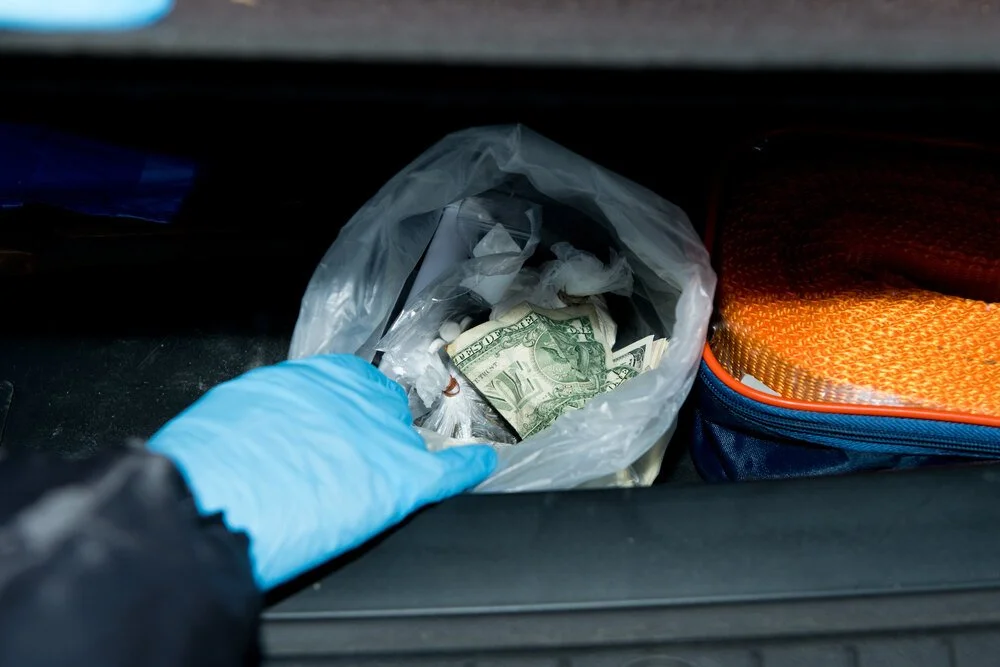
Legalization changed the landscape without eliminating marijuana offenses, and the amounts that remain legal are narrower than many people assume. Although recreational cannabis is legal for adults 21 and older within certain limits, Minnesota still criminalizes possession, sale, and cultivation that violate state law. Many cannabis offenses have their own classifications and penalties, while certain large-scale offenses can still fall under Minnesota's controlled substance crime statutes.
Possessing more than two ounces but not more than four ounces of cannabis flower somewhere other than your residence is fourth-degree cannabis possession, a petty misdemeanor. More than four ounces but not more than a pound moves to a misdemeanor third degree, punishable by up to 90 days and a $1,000 fine, with gross misdemeanor and felony levels above that. Concentrate and edibles carry much lower thresholds.
One rule that catches many people off guard is Minnesota's open-package law which applies to marijuana as well as alcohol. In a private vehicle on a street or highway, cannabis generally has to stay in compliant, unopened packaging unless it is stored in the trunk or another area not normally occupied by the driver or passengers. A legal quantity carried in the wrong packaging can still result in a charge.
Drug Sale Charges Are Broader Than Most People Realize
Minnesota's statutory definition of a sale includes selling, giving away, bartering, delivering, exchanging, distributing, or disposing of a substance to another person (it includes manufacturing). It also reaches offering or agreeing to do any of those things, and possessing a substance with intent to do them.
The practical consequence is that someone who never took a dollar can still face a drug sale charge. Handing a pill to a friend fits the definition, and so does an arrangement discussed but never carried out.
When prosecutors allege intent to sell without a completed transaction, they build the case from circumstantial evidence such as quantity, packaging, scales, cash, and text messages. Those facts can look damning in a charging document while carrying much less weight on examination, since packaging and quantity may also be consistent with personal use.
This is why it is important to talk to an attorney before you say anything to police. The more you say, the more they can use against you. Call Lushanko Law today for a free consultation.
What Can Make a Minnesota Drug Charge More Serious?
Several circumstances can increase the severity of a Minnesota drug charge, even when the quantity of drugs involved is relatively small. Depending on the circumstances, these factors may result in more serious charges or additional penalties.
Possessing or using a firearm during the offense
Transferring substances across a state or international border into Minnesota
Three or more separate alleged transactions
Using a position of trust to facilitate the offense (teachers, coaches, mentors, etc.)
Selling to a person under 18 or to a vulnerable adult
Conduct in a school zone, park zone, correctional facility, or drug treatment facility
Paraphernalia, documents, or cash suggesting quantities well above the threshold
Occupying a high position in an alleged distribution hierarchy
Protected-location provisions deserve special attention because the statutory definitions of school and park zones extend beyond the property lines themselves. A person can be inside a zone without any awareness of it, especially in dense parts of Minneapolis where schools, parks, and public housing sit close together.
Does the Maximum Penalty Mean That Is the Sentence You Will Receive?
It’s important to remember that statutory maximums describe the ceiling, while the presumptive sentence for a felony drug conviction comes from the Minnesota Sentencing Guidelines and the Drug Offender Grid.
The grid combines the severity level assigned to the offense with the person's criminal history score, and where those intersect produces a presumptive disposition, meaning prison or probation, along with a duration. Many lower-level drug offenses carry a presumptive stayed sentence rather than prison for someone with little or no criminal history.
The 2026 Sentencing Guidelines took effect on August 1, 2026, and changed how criminal history is calculated, including the look-back period for prior felonies and the treatment of juvenile adjudications (convictions). Your lawyer will be able to advise you as to what changed and how it could affect your case.
Can a Minnesota Drug Charge Be Reduced or Dismissed?
Being charged is not the same as being convicted, and drug cases often present several potential defenses.
Illegal Search or Seizure
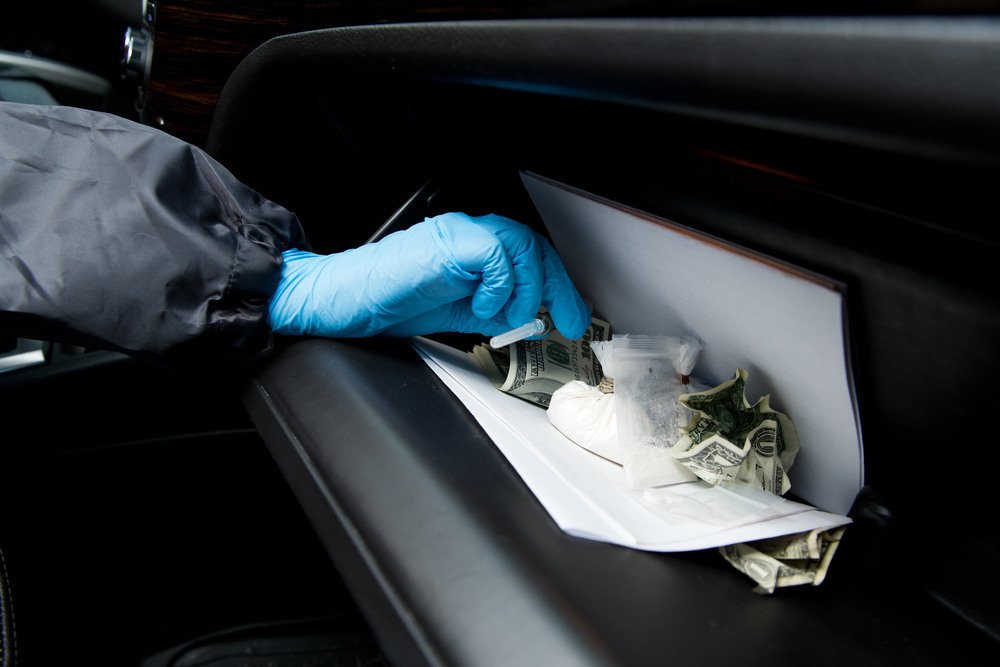
Many drug cases begin with a search, whether a traffic stop, a warrant execution, or a search the officer characterizes as consensual. Each carries legal requirements, and when evidence is obtained in violation of constitutional protections, your lawyer can move to suppress it. A successful motion can leave the state without the evidence its entire case depends on.
Knowing Possession and Intent to Sell
In constructive possession cases the state must prove the person knew the substance was there and controlled it. Shared vehicles and residences frequently make that hard to establish beyond a reasonable doubt. Intent-to-sell allegations rest largely on quantity and packaging, and both are open to competing explanations. Where the evidence is entirely circumstantial, the gap between what the state suspects and what it can prove is often wider than the charging decision suggests.
Laboratory and Evidence Problems
Substance identification, testing methodology, recorded weight, and chain of custody are all open to challenge. Since weight thresholds determine the degree of the offense, a measurement problem can reduce a charge rather than merely weaken it. The weight in a police report is not always the weight that survives laboratory testing. While these might sound like minute details, they can provide serious leverage in the right situations.
Negotiated and Treatment-Based Resolutions
Minnesota law provides mechanisms that can allow certain possession cases to resolve without a conviction being entered, and some are better addressed through treatment than litigation. Eligibility depends heavily on the specific charge and the individual record.
What Should You Do If You Are Facing Drug Charges in Minnesota?
The decisions made in the first days after an arrest matter more than people expect.
Do not discuss the facts with police without an attorney, including in conversations that feel informal
Do not post about the arrest or the allegations on social media
Preserve texts, receipts, and the names of anyone present
Write down what you remember about the stop or search while it is fresh
Track every court date and comply with any conditions of release
Have an attorney review how law enforcement found and seized the alleged substance
That last point deserves extra emphasis, because how the evidence was obtained is frequently the single most important issue in the case. A skilled criminal defense attorney can run with that to secure a better deal or leverage it to get the charges dropped completely.
Facing a Minnesota Drug Charge? Talk With Lushanko Law
If you’re facing a drug charge in Minnesota, it’s important to remember that a charge is merely an accusation. The State still needs to prove that you are guilty of each individual charge. Hiring an experienced criminal defense lawyer can make all the difference when it comes to building, presenting, and arguing your case.
At Lushanko Law, we focus exclusively on criminal defense. Attorney Trevor Lushanko personally handles each case, providing clients with direct communication and individualized attention. Whether you're facing a fifth-degree possession charge or a serious felony drug offense, we thoroughly examine the evidence, challenge unlawful searches, and work toward the best possible outcome.
If you have questions about the charges you’re facing, contact Lushanko Law today to start your free consultation.